Hearing the Difference: An Audio-First Playbook for Social Listening in 2026
Text-only social listening has a blind spot, and in 2026 it is getting wider. A brand can track every caption and comment while missing the tone of a creator's voice, the irony in a podcast clip, or the difference between a sound used as a joke and a sound used as a recommendation. Short-form video, podcast excerpts, and platform-native audio now carry sentiment that keyword models cannot reliably capture. For US marketing teams, the question is no longer whether to listen to audio. It is how to build a pipeline that hears the difference between a sound everyone uses and a signal worth acting on.
Why room tone matters
Audio adds context that text strips away. The same sentence can read as praise in a transcript and land as sarcasm in a voiceover. A trending sound can signal affiliation, ridicule, or simple participation in a format. Without the audio layer, analysts over-index on words and under-index on delivery.
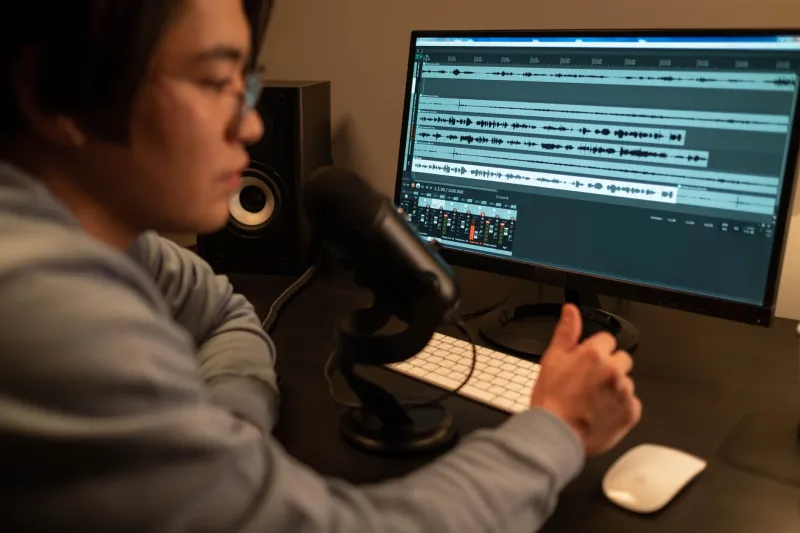
An audio-first practice treats sound as a first-class data source. It captures the clip, separates speech from music and ambient noise, transcribes the speech, and scores delivery features such as pace, energy, hesitation, and emphasis. The aim is not to replace text analysis. It is to give text analysis a richer evidentiary base.
Step 1: Build a lawful audio capture layer
Start with the platforms where your audience actually speaks. For most US brands that means TikTok, Instagram Reels, YouTube Shorts, and podcast clips distributed through YouTube and major podcast apps. Build a capture list around campaign hashtags, creator handles, product terms, and known audio memes. Store only what your legal and privacy teams approve, and document retention rules before collection begins.
Capture should include the audio track, the transcript, the platform, the creator handle, the publication time, and the on-screen text. The on-screen text matters because it often carries the joke or the call to action while the audio carries the tone. Teams should also record whether the clip uses a platform-native sound library track or original audio.
Step 2: Separate trend-sound adoption from advocacy
The central analytical trap is mistaking sound usage for endorsement. A creator who uses a popular audio clip may be participating in a format, not recommending a product. The playbook should classify every audio mention on two axes: sound saturation and brand specificity.
Sound saturation measures how widely the audio is used across the platform. Brand specificity measures how much the clip says about the brand, product, or category. A high-saturation sound with low brand specificity is ambient participation. A low-saturation sound with high brand specificity is a candidate for advocacy analysis. The most valuable quadrant is original audio with specific brand language and emotional delivery.
Step 3: Read voice tone and transcripts together
Transcripts give analysts the claims. Voice features give them the intent. A practical model should extract both and compare them. If a transcript says a product is life-changing but the delivery is flat and fast, the clip may be ironic or scripted. If the words are neutral but the voice is warm and detailed, the clip may contain genuine recommendation behavior that keyword models would miss.
Useful voice features include speaking rate, pitch variance, energy, pauses, and overlap with background music. These should be interpreted relative to the creator's own baseline, not against a universal standard. A calm creator is not necessarily unenthusiastic. The model should flag mismatch between words and delivery, then route the highest-value clips to human review.
Step 4: Map migration across platforms
Audio memes move. A sound can begin on TikTok, appear in Instagram Reels, surface in YouTube Shorts, and then be discussed on podcasts. Each move changes the audience and often the meaning. An audio-first pipeline should track first-seen timestamps, velocity, mutation, and cross-platform spread.
Migration analysis helps US marketers distinguish a durable cultural signal from a platform-specific blip. If a sound stays inside one platform and never crosses into podcast commentary or creator explainers, it may be a format trend. If it migrates and picks up brand-specific language along the way, it deserves closer attention. The same logic applies to negative audio: a complaint clip that moves from short-form video into podcasts is more serious than one that remains in a single feed.
Step 5: Convert audio signals into decisions
The output of the pipeline should be a small set of decision-ready signals, not a dashboard of every clip. For each signal, record the platform path, the transcript excerpt, the tone assessment, the brand specificity score, and the recommended action. Actions might include monitoring, creator outreach, paid amplification, product feedback, or escalation to communications.
Human review remains essential. Audio is interpretive, and sarcasm, regional accents, and community-specific humor can confuse automated models. Reviewers should check the highest-velocity clips, the most brand-specific clips, and any clip that could affect reputation. Their notes should feed back into the model so that the pipeline learns the brand's own audio context.
A practical cadence for US teams
Run daily capture and weekly synthesis. Daily capture keeps the audio archive current. Weekly synthesis prevents analysts from chasing every meme. Monthly, review the sound-saturation thresholds and the list of creators who produce original brand audio. Quarterly, audit the pipeline for legal compliance and false positives.
The payoff is not more listening. It is better hearing. An audio-first practice gives US marketers a way to detect genuine advocacy, understand tone, and follow cultural migration without confusing participation with recommendation.